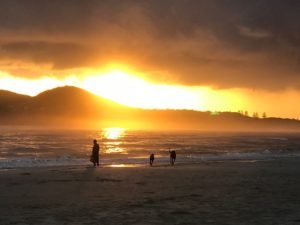
Is your city lifestyle sometimes lacking? Lots of concrete and steel and not enough sand under your heels? Nature may be calling.
A Nature Lover’s Paradise
Feeling suffocated by city life? Craving the sound of waves, the smell of salt and eucalyptus, and the sudden thrill of spotting wild creatures just meters away?
Byron Bay, on the far-north coast of New South Wales, is one of Australia’s most accessible and biodiverse wildlife hotspots. Within a 30-kilometre radius visitors find sweeping golden beaches, ancient Gondwana rainforests, restored coastal wetlands, heathlands, estuaries, and a nutrient-rich marine park.
This rare convergence of tropical and temperate ecosystems creates a year-round stage for extraordinary animals, from cheeky birds that raid picnic tables to 40-tonne humpback whales launching clear out of the water.
Every sunrise walk, afternoon paddle, or evening drive becomes an impromptu safari. This comprehensive guide explores the region’s iconic species, the very best viewing locations, seasonal highlights, and responsible practices so every visitor leaves with memories, and the environment remains protected.
Why Byron Bay is a Wildlife Magnet
Byron Bay sits exactly where the warm East Australian Current swings closest to shore, delivering tropical water and marine life far south of the Great Barrier Reef.
At the same time, the hinterland rises into the World Heritage-listed Nightcap, Border Ranges, and Wollumbin national parks; remnants of the super-continent Gondwana.
The result is an astonishing overlap of habitats: paperbark wetlands, littoral rainforest, wallum heath, mangrove-lined estuaries, and rocky headlands all within easy reach.
More than 300 bird species, 500 fish species, 50 mammal species, and countless reptiles and amphibians thrive here.
A relaxed, conservation-minded community and decades of national-park protection mean animals are unusually relaxed around humans, yet remain truly wild because feeding is strictly prohibited.
A Year-Round Wildlife Calendar
Unlike many destinations with one narrow “best” season, Byron Bay delivers spectacular sightings every month:
December–April: Sea-turtle nesting and hatching, summer dolphin super-pods, migratory shorebirds from Siberia and Alaska.
Year-round: Bottlenose dolphins, eastern grey kangaroos, swamp wallabies, koalas, rainbow lorikeets, and eastern water dragons.
Flying Beauties: The Birds of Byron Bay
Dawn in Byron Bay is announced by an explosion of sound and colour. Squadrons of rainbow lorikeets streak overhead in flashing reds, blues and greens, while channel-billed cuckoos give their prehistoric shrieks.
The Australian brush-turkey. The brush turkey is a large black bird with a bald red or yellow head and bright neck wattle, is the town’s most brazen resident.
They build two-metre-high incubation mounds from leaves and soil and think nothing of marching through cafés or flipping lids off eskies.
They are everyday sights along the Cape Byron Walking Track, Arakwal National Park, and even suburban backyards.
Laughing kookaburras perch on power lines and fence posts, their rolling call the quintessential Australian soundtrack. The 6.6 km Cape Byron Lighthouse loop is prime territory. Visitors often hear entire family groups laughing together just before sunrise.
Overhead, white-bellied sea-eagles and Brahminy kites circle on six-foot wingspans. Early risers on Tallow, Belongil, or Wategos Beach regularly watch these raptors plummet into the surf for fish or return to massive stick nests in Norfolk pines.
In the hinterland, Minyon Falls and Nightcap National Park shelter superb lyrebirds (master mimics that copy chainsaws, camera shutters, and other birds), glossy black-cockatoos feeding on casuarina cones, and the endangered Albert’s lyrebird.
The restored West Byron Wetlands, only ten minutes from the center of town, are a birdwatcher’s paradise with elevated boardwalks and hides.
Over 227 species have been recorded, including black-necked storks, comb-crested jacanas walking on lily pads, cotton pygmy-geese, and flocks of magpie geese at dawn, and raptors such as swamp harriers and whistling kites.
From December to March the mudflats host thousands of migratory shorebirds that have flown non-stop from the Arctic: bar-tailed godwits, eastern curlews, grey-tailed tattlers, and tiny red-necked stints still wearing their breeding plumage.
Magical Encounters in the Ocean
Byron Bay is consistently ranked among the top three land-based whale-watching sites on the planet. Between May and November more than 40 000 humpback whales migrate past Cape Byron.
Mothers with newborn calves often rest in the lee of the cape, while competing males breach, tail-slap, and pectoral-fin slap in spectacular displays.
Sea-kayak tours regularly pause paddling because curious whales approach within 20–30 metres. This is an experience that will last a lifetime.
Resident pods of bottlenose dolphins surf the waves year-round and love to bow-ride kayaks and boats. In summer, super-pods of common dolphins numbering 500–1 000 individuals race alongside vessels in glittering, leaping formations.
Just 2.5 km offshore lies Julian Rocks (Nguthungulli in Bundjalung language), rated one of Australia’s top ten dive sites. The merging of warm tropical and cooler temperate currents creates a marine hotspot.
Snorkelers and divers swim with green and loggerhead turtles, grey nurse sharks (completely harmless to humans), wobbegong sharks, giant Queensland grouper, manta rays, and eagle rays. From December to April leopard sharks rest on sandy patches.
Visibility frequently exceeds 20 meters, and the coral gardens burst with moorish idols, clownfish, moray eels, and schools of trevally.
On the quieter beaches east and north of town (Tyagarah, Belongil, Brunswick Heads), endangered loggerhead and green turtles nest from November to March.
Hatchlings emerge 6–8 weeks later and make their perilous dash to the sea. This is a sight offered on guided night tours with local Arakwal Bundjalung rangers.
Land and Nighttime Wonders
At dawn and dusk eastern grey kangaroos and swamp wallabies graze golf courses, roadside verges, and national-park clearings.
Koalas, though quieter, are regularly spotted snoozing in swamp mahogany and tallowwood trees around Bangalow, Federal, and the coastal strip between Lennox Head and Broken Head.
Eastern water dragons, those metre-long lizards made famous by the legendary bacon-stealing incident at Arts Factory Lodge, bask on rocks beside almost every creek and picnic table.
Carpet pythons curl through tree branches, and lace monitors (goannas) up to 1.8 metres long stride confidently across walking tracks.
After dark the hinterland becomes magical. The Natural Bridge in nearby Springbrook National Park (90 minutes) and the Lyrebird Track in Nightcap National Park host spectacular glow-worm colonies that turn damp cave walls into star fields.
Powerful owls, southern boobooks, and barking owls call through the forest, while sugar gliders and squirrel gliders launch from treetops on moonlit nights. On Mount Warning (Wollumbin), a pre-dawn summit hike rewards climbers with both sunrise over the caldera and glow-worm caves on the descent.
Best Places to Experience Byron Bay Wildlife
Cape Byron State Conservation Area & Lighthouse Walk (6.6 km loop) Panoramic whale-watching, dolphins, brush-turkeys, sea eagles, and Australia’s most easterly point.
Julian Rocks (Nguthungulli) Marine Reserve Daily snorkel/dive boats depart from Byron; book with Sundive, Byron Bay Dive Centre, or Blue Bay Divers.
West Byron Wetlands & Arakwal National Park Free entry, boardwalks, excellent bird hides, open sunrise–sunset.
Broken Head Nature Reserve & Beach Quiet beaches, koalas in coastal forest, far fewer people than central Byron.
Minyon Falls, Nightcap National Park Rainforest walks, lyrebirds, waterfalls, glow-worm possibilities.
Maintain 100 m distance from whales in vessels, 300 m if another vessel is present (Australian law).
Never feed native animals — it causes dependency, disease, and aggression.
Use only reef-safe, zinc- or titanium-based sunscreen; chemical sunscreens bleach coral.
Stick to marked trails to protect turtle nests and fragile dune vegetation.
Take all rubbish with you — even fruit peel attracts introduced pests.
Choose operators displaying the green Eco Certification logo.
Visit at dawn or dusk for peak activity and cooler temperatures.
Where to Stay for Maximum Wildlife Immersion
Elements of Byron — private boardwalks into littoral rainforest, wallabies at dusk.
The Sanctuary at Byron — rainforest cabins with resident koalas.
Broken Head Holiday Park — beachfront sites where kangaroos graze at sunset.
Byron Bay Eco Cruises & Kayaks glamping — wake to birdsong and wallabies.
Reflections Holiday Parks Clarkes Beach or Suffolk Beach — direct national-park access.
Final Thoughts
Byron Bay proves that one small stretch of coastline can deliver world-class wildlife encounters every single day of the year. Stand on the Cape Byron lighthouse balcony as a whale breaches against the rising sun.
Drift in a kayak while a curious calf spy-hops beside you. Snorkel through a living aquarium at Julian Rocks. Listen to lyrebirds mimic the forest while glow-worms light up a cave like fallen stars.
These moments don’t just entertain, they rewire perspective, slow time, and remind everyone how interconnected and fragile the natural world is.
Pack binoculars, reef-safe sunscreen, a reusable water bottle, sturdy shoes, and an open curiosity. Leave loud expectations at home and let the animals appear on their own schedule.
Many visitors arrive planning a long weekend and end up extending their stay, or moving here permanently. Byron Bay’s wildlife has that effect. Come ready to be astonished.
The brush-turkeys are already eyeing your sandwich, the dolphins are surfing the next wave, and somewhere just offshore a whale is warming up for the show of a lifetime.